A critical, international programme examining the roots of the ecological crisis and social inequality, pushing the intellectual foundations for post-growth & post-capitalist alternatives.
Key Info
About the Programme
This is the first international master's programme fully dedicated to degrowth: the critical study of growth-based economies and the political project of building just, ecologically viable alternatives.
The programme is founded on a materialist and structural diagnosis: the deepening social inequalities, rising fascism, and accelerating ecological collapse we face are not accidental. They are driven by an imperial and racist global economic system organised around extraction, exploitation, dispossession and the imperative of endless growth.
Our curriculum draws on ecological economics, political ecology, feminist and anti-colonial thought, and social movement research. It centres perspectives from the Global South as foundational to rethinking development, justice, and ecological sovereignty.
We don't pretend to offer ready-made solutions. We offer rigorous training in analysing the growth economy, understanding its historical and material roots, analysing imperial and capitalist dynamics impeding change, and developing credible alternatives in collaboration with a global community of scholars, activists and practitioners.
Who It’s for
This programme is for people who want to think seriously about how to bring about genuine eco-social transformation.
You might be an activist who's hit the limits of reformist thinking. A policymaker trying to do something real within shrinking room for manoeuvre. A journalist, artist, or organiser looking for the analytical tools to match what you see on the ground. Or someone fresh out of university who already knows the mainstream isn't worth learning from.
We welcome applicants from any disciplinary background, economics, sociology, geography, design, business, philosophy, biology, engineering, law, etc. What matters is that you're willing to learn collectively, argue respectfully, and open to thinking critically about growth, power, ecology, and justice alongside people from many different backgrounds.
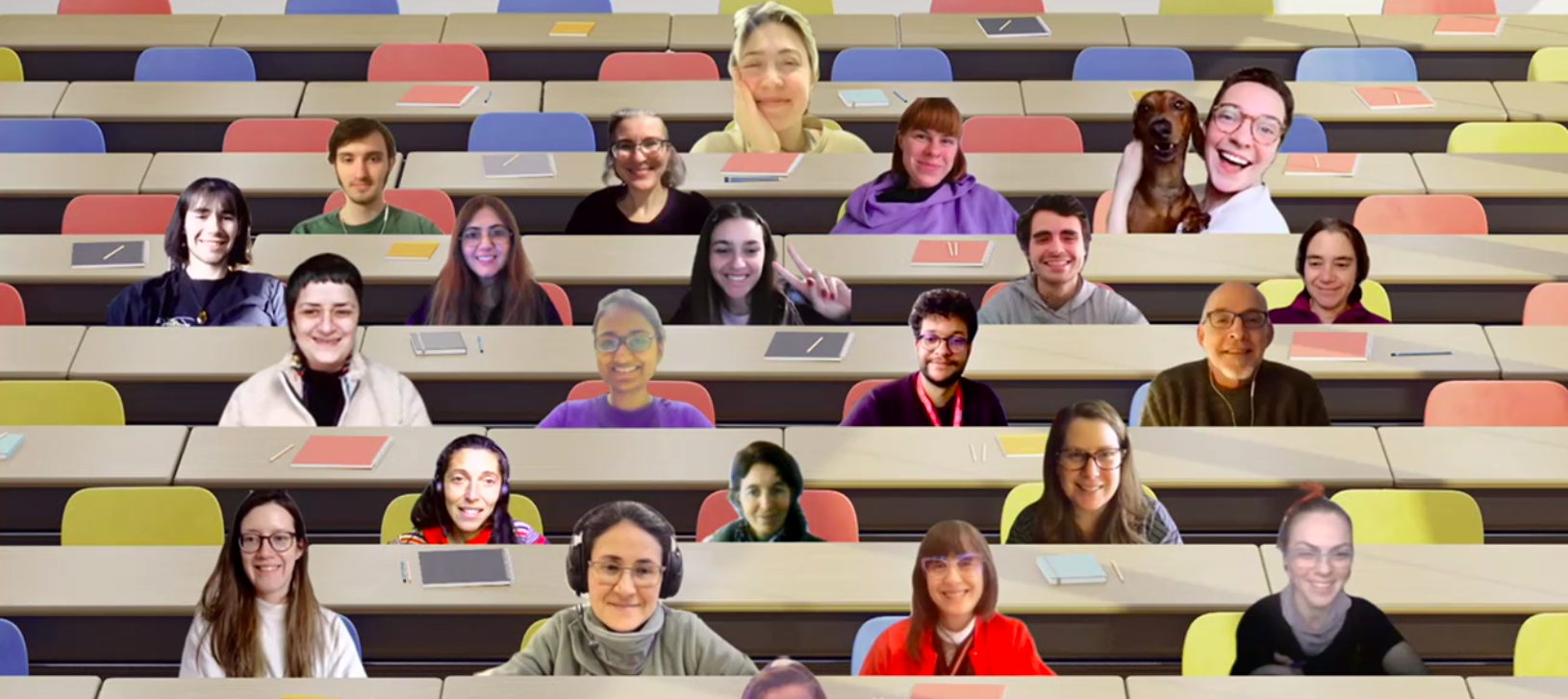
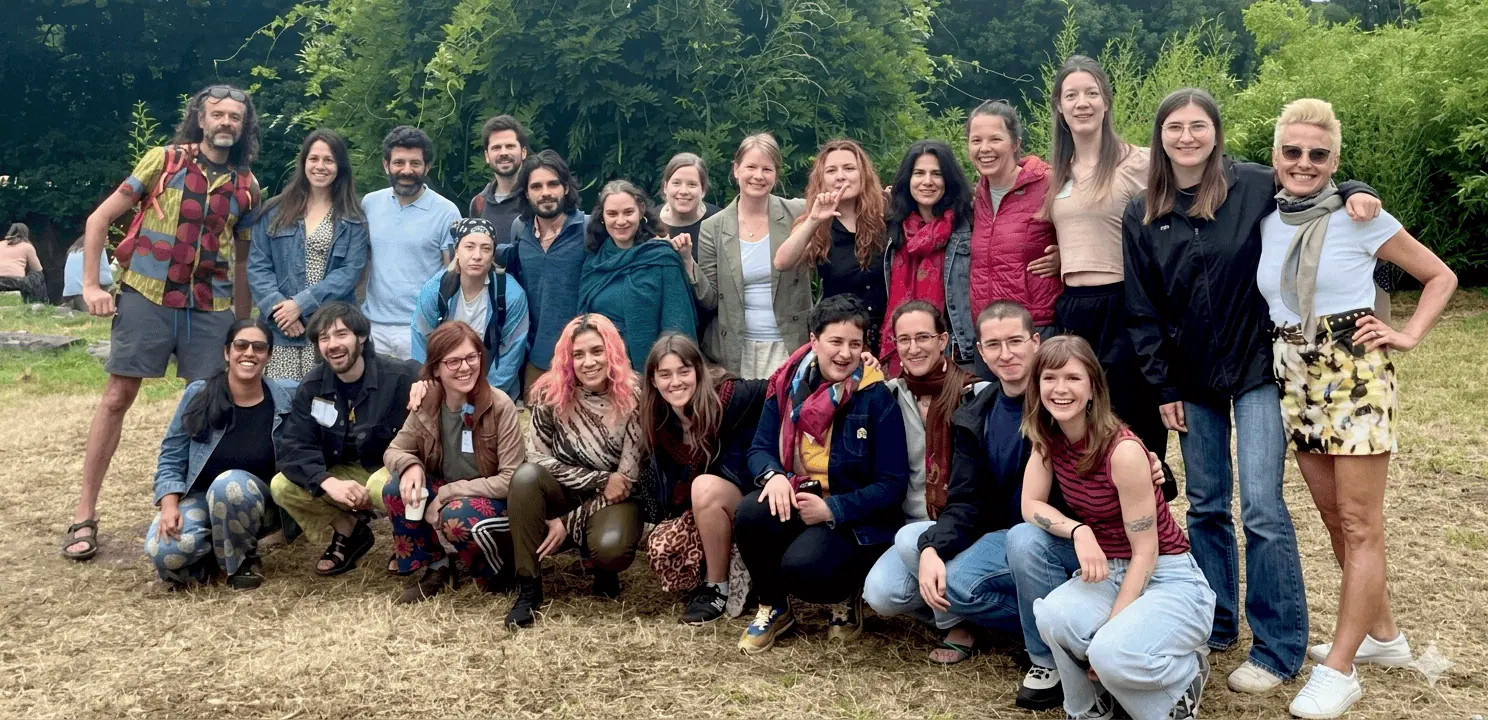
You will likely learn as much from your peers as from your professors. We aim to co-learn together by sharing our lived experiences and specialised knowledge.
Programme and Lecturers
Our faculty is an international, multidisciplinary team of scholar-activists working at the forefront of degrowth research: in ecological economics, political ecology, feminist and anti-colonial theory, social movements, energy and climate policy, anti-imperialism, delinking, and alternatives to development. Many are directly engaged with movements across the world.
⚠️ Note: The following reflects the 2025–26 programme structure and is currently under revision for the upcoming academic year. Content, instructor details, and sequencing may change.
6 ECTS | 37.5 hours · Coordinator: Arpita Bisht (Geneva Graduate Institute)
1 - Introduction to Degrowth
Lucía Muñoz Sueiro (ICTA-UAB) & Aljoša Slameršak (ICTA-UAB)
A broad introduction to the degrowth frame: its intellectual history, core claims, and multiple currents. Covers critiques of growth (ecological, feminist, decolonial), the contested notion of limits, diverse pathways and strategies for transformation, and key debates, both with opponents (green growth) and sympathetic critics.
2 - Degrowth, Environmental Conflicts and Global Environmental Justice
Arpita Bisht (Geneva Graduate Institute / ICTA-UAB)
Introduces the Barcelona school's approach to commodity frontiers and ecological distribution conflicts. Explores environmental justice movements across North and South, extractivism and social metabolism, the Environmental Justice Atlas, green sacrifice zones, and the political question of alliances between degrowth and Global South environmental justice movements.
3 - Capitalism, Colonialism and Degrowth
Jason Hickel (ICTA-UAB)
Situates the ecological crisis within the history of capitalism, colonialism, and anti-colonial struggle. Covers colonial extraction and the rise of the world-system, decolonisation and the neoliberal backlash, unequal exchange as an imperial mechanism, the colonial dimensions of ecological breakdown, and proposals for unilateral decolonisation and Southern economic sovereignty.
12 ECTS | 75 hours · Coordinator: Brototi Roy (ICTA-UAB)
1 - Quantitative Methods for Social and Biophysical Analysis
Tina Beigi (University of Barcelona) & Morena Hanbury Lemos (ICTA-UAB)
Introduction to modelling and accounting in socio-ecological research: IPAT, ecological footprints, input-output analysis, quantitative storytelling, and life-cycle assessment. Emphasis on critically assessing assumptions and using models to support degrowth arguments, from ecologically unequal exchange to scenario analysis.
2 - The Hegemony of Growth
Matthias Schmelzer (Europa-Universität Flensburg)
A historical excavation of the growth paradigm: its 17th-century cornucopian origins, the invention of "the economy" and GDP, the post-war consolidation of growthmanship, and its critique. Explains how growth became hegemonic and why that history matters for degrowth strategy.
3 - Feminist Economics and Degrowth
Corinna Dengler (Vienna University of Economics and Business)
Introduces feminist economics and its intersections with degrowth through materialist ecofeminism, feminist ecological economics, and the sustainability-of-life framework. Explores care organisation in a degrowth society (commons, care income) and a feminist reframing of debt and who owes whom.
4 - Ecological Economics and Degrowth
Elke Pirgmaier (Université de Lausanne)
Foundations of ecological economics as a heterodox discipline: biophysical accounting, thermodynamics and social metabolism, human needs and decent living standards, social provisioning versus market allocation, and post-normal science as transformative practice for a degrowth transition.
5 - Ecological Economic Models and Degrowth
Simone D'Alessandro, David Cano Ortiz & Guilherme Morlin (University of Pisa)
Introduction to heterodox and post-Keynesian economics, ecological macroeconomics, and the structure of integrated assessment models. Hands-on system dynamics modelling and scenario analysis, building a simple stock-flow-consistent ecological macroeconomic model.
6 - Decolonising Economics
Brototi Roy (ICTA-UAB)
Examines the coloniality of mainstream economics as a discipline: its core assumptions, historical exclusion of pluralist traditions, and movements for change. Charts a decolonial agenda for economics rooted in Global South perspectives and its articulation with degrowth.
6 ECTS | 37.5 hours · Coordinator: Filka Sekulova (University of Barcelona)
1 - Degrowth, Simplicity and Well-Being
Filka Sekulova (University of Barcelona / UOC)
Explores the well-being stream of degrowth scholarship: objective and subjective approaches to measuring well-being, the Easterlin paradox, materialism and positional consumption, meaningfulness and community well-being, and applied research on happiness in contexts of income decrease and climate events, building a counterhegemonic narrative to utilitarian thought.
2 - The Soul of Degrowth
Giorgos Kallis (ICREA / ICTA-UAB)
An experimental reading-group course reclaiming the philosophical and spiritual dimensions of degrowth that have been sidelined by its focus on quantitative and policy modelling. Engages with anti-utilitarianism, the gift paradigm (Mauss, Caillé), dépense (Bataille), and contemporary and Black feminist thought on rest, joy, pleasure activism, and vivir sabroso.
3 - The Connecting Nature of Degrowth Alternatives and Community Economies
Angelos Varvarousis (ICTA-UAB)
A game-based course structured around the board game UPSTREAM, exploring the support structures and spatial politics that enable degrowth alternatives and commons-based community economies in concrete geographies. Moves from a linear to an ecosystemic understanding of how alternatives emerge, connect, and are reinforced.
6 ECTS | ~50 hours · Coordinator: Borja Nogué Algueró (ICTA-UAB)
Space, Planning & Housing
- Jin Xue (Norwegian University of Life Sciences) — Urban Degrowth: sufficiency planning, degrowth critique of sustainable urban development
- Julia Grosinger (ICTA-UAB) — Rural Degrowth: growth paradigms in rural areas, avoiding local traps
- François Schneider (R&Di) — Housing for Degrowth: reducing sprawl, redistributing stock, cooperative dwelling
- Santiago Gorostiza (LUCSUS) — The 1936 Revolution in Barcelona: anarchist environmental history, collective management
Energy & Extractivism
- Marula Tsagkari (University of Barcelona) — Energy Communities: energy cooperatives as vehicles for degrowth
- Sofía Avila (UNAM, Mexico) — Energy Justice: critical environmental justice meets degrowth
- Ksenija Hanaček (ICTA-UAB) — Human-Nature Bonds: extractivism, environmental conflicts, decolonial ontologies
- Daragh Cogley (Maynooth University) — Metabolic Rift: Marxian ecology, repair of socio-ecological relations
Political Economy & Alternatives
- Tilman Hartley (University of Cologne / Utrecht University) — Debt & Degrowth: interest-bearing debt in non-growing economies
- Mladen Domazet (Institute for Political Ecology) — Degrowth Doughnut (3 sessions): doughnut economics, Barcelona application, degrowth modification
- Eva Fraňková (Masaryk University, Brno) — Eco-Social Enterprise: social economy, diverse economies, degrowth business models
- Alekos Pantazis (University of Thessaly) — Design Global, Manufacture Local: commons, digital commons, cosmolocalism
Culture, Care & Imagination
- Susan Paulson (University of Florida) — Masculinities, Ecosocial Care & Regeneration: decolonial/ecofeminist perspectives on care
- Onofrio Romano (University of Rome 3) — 3D Life: Demodernization, Degrowth, Dépense: Bataille's dépense, collective enjoyment over austerity
- Carlo Sella (UOC) — Degrowth & Art (3 sessions): art-activism, situated practice, collective imagination
- Sara Arnold & Lara Fank (Fashion Act Now) — Fashion & Degrowth: defashion, commoning, pluriversal alternatives
Food, Tourism & Global Alternatives
- Sam Bliss (University of Vermont) — Food & Degrowth: market and non-market food practices, gift economies
- Macià Blázquez Salom (UIB) — Tourism & Degrowth: planned contraction and convergence
- Shrishtee Bajpai (Kalpavriksh) — Radical Alternatives from the Global South: eco-swaraj, buen vivir, grassroots democracy
12 ECTS | 75 hours · Coordinator: Claudio Cattaneo (ICTA-UAB)
1 - State and Degrowth
Giacomo D'Alisa (ICTA-UAB)
Explores theories of the state (Bourdieu, liberal neutrality, welfare state beyond redistribution) and develops a Gramscian analysis of the state as a site of transformation for degrowth. Concludes with empirical cases using Marxian and Gramscian approaches to understand the state's enforcement of growth vs. degrowth.
2 - Policies for Degrowth
Nick Fitzpatrick (Aarhus University)
Frames degrowth policy design through the anti-imperialist thought of Samir Amin and the pedagogical praxis of Paulo Freire, treating policy as a site of struggle rather than technocratic design. Covers delinking, policy ends/means for workers and state apparatuses, historical-materialist policy analysis, and internal debates within the degrowth movement.
3 - Social Movements, Democracy and Degrowth
Barbara Muraca (University of Oregon) & Lorenzo Velotti (Scuola Normale Superiore, Florence)
Examines links between social movements, democracy, autonomy and degrowth; explores whether degrowth itself is a social movement; introduces class struggle perspectives often underexplored in degrowth; and discusses degrowth as a radical alternative to neoliberal restructuring, with attention to deliberative and direct democracy.
4 - Activism and Degrowth
Sara Fromm & Claudio Cattaneo (ICTA-UAB)
Structured around Erik Olin Wright's theory of change (four ways of creating alternatives to capitalism). Covers: escaping capitalism (squatting), taming capitalism (campaigning and alliance building around anti-aviation work via Stay Grounded), smashing capitalism (civil disobedience), and resisting capitalism (communication). Final session is student-led on personal experiences, strategy, burnout, and activist trauma.
5 - Post-growth Business and Degrowth
Verónica Devenin (Eada Business School) & Melanie Rieback (Radically Open Security)
Explores how businesses can transform toward post-growth scenarios. Covers diverse economies frameworks (Gibson-Graham), degrowth business frameworks, consumption/sufficiency/voluntary simplicity, and post-growth entrepreneurship.
6 - Strategies for Degrowth
Ekaterina Chertkovskaya (Lund University)
Examines strategic thinking in relation to degrowth, engaging critically with Erik Olin Wright's modes of transformation. Covers strategy for the degrowth movement and applies it to provisioning sectors (energy, housing, transport, digital technologies) and areas of economic/political reorganisation (care, work, money, trade, decolonisation). Student-led classes using the Degrowth & Strategy volume.
6 ECTS | 37.5 hours · Coordinator: Jesse Segura (ICTA-UAB)
1 - Pluriverse and Degrowth
Marta Musić & Bengi Akbulut (Concordia University)
Introduction to the pluriverse of alternatives to development and situating degrowth within the diverse landscape of alternatives to colonial-capitalist economies of growth. Covers theoretical foundations of the pluriverse, decolonial feminist perspectives, critiques of White Eurocentric co-optation, and the Kurdish Freedom Movement's Democratic Economy Project as a concrete case linking degrowth with autonomy, gender equality, and ecology.
2 - Degrowth and Post-extractivism with a Special Focus on Latin America
Sabrina Fernandes (Alameda Institute)
Explores socioecological transition frameworks from the periphery, troubling Global North/South binaries. Engages with extractivist developmentalism and the commodities consensus, old and new sacrifice zones including green sacrifice zones, demands for justice and autonomy, and pathways towards popular ecological sovereignty through an internationalist just transition lens.
3 - Mongolian Cosmovisions, Decoloniality, and Everyday Resistance
Jesse Segura (ICTA-UAB)
Examines how coloniality persists in non-Western contexts through the case of Inner Mongolia, focusing on everyday acts of resistance including poetry and song as forms of agency, and Indigenous sensibilities and methodologies for deepening degrowth research and practice.
4 - Racialisation and Racism Against Roma People: An Enduring Cycle in Europe
Margareta Matache
Interdisciplinary critical examination of Roma history, terminology, and the continuum of anti-Roma racism in Europe. Covers structural inequities, the racialisation of Roma bodies in urban spaces, barriers to higher education, and the permanence of anti-Roma racism as a pillar of European modernity.
5 - Ecological Destruction, Imperialism and Delinking
Max Ajl (UGent / MECAM-University of Tunis)
Explores how imperialism manifests in the ecological sphere and how ecological destruction and social deprivation are part of core-periphery conflict. Engages with theories of monopoly capital, unequal exchange, green colonialism, and sovereign development/delinking as responses, drawing on Third World political economy.
12 ECTS | ~300 hours · Coordinator: JP Arellano (ICTA-UAB)
The TFM is a guided but independent project where you bring together what you've learned and apply it to something you care about. It could be a piece of research, a campaign tool, a documentary, a podcast series, an artistic intervention, a policy brief, an internship with an organisation or party doing the work on the ground.
You choose the format that fits your politics, your skills, and the impact you want to have using the knowledge you've acquired in the programme:
- Option A: an academic research paper ready for journal submission;
- Option B: a creative or public-facing output (film, podcast, zine, website, exhibition, etc.) plus a short reflective report;
- Option C: a practicum/internship with a host organisation (NGO, company, political party, etc.) plus a short reflective report.
Group and collaborative TFMs are encouraged!
You'll work closely with a supervisor, and defend your work in a public TFM Festival format. Defences happen in two windows: October or March of the year after you finish classes. It's a significant piece of independent work, but structured with support throughout.
Thinking of Applying?
Applications for the 6th edition (2026/2027) are now open until the 30th of June 2026!
There's a full page on the application process, required documents, and evaluation criteria.
Our Learning Approach
The programme runs with weekly live sessions that combine lecture-style input, structured discussion, and group work. Classes are held online in 2.5-hour sessions scheduled weekday afternoons (14:00–16:30 Barcelona time) to accommodate participants across different time zones. All sessions are recorded and available for later viewing.
Assessment varies by module and may include essays, book reports, creative outputs, group presentations, and other formats. You will also complete a final master's thesis or project, with tutoring support throughout.
For each ECTS, expect up to 25 hours of total work (class plus reading and assignments). We strongly advise against working full-time while taking the full-time programme. Even part-time alongside a full-time job can be demanding, especially with care responsibilities.
Full-time students finish in one year. Part-time track spreads the same load over two.
Tuition and scholarships
| Full programme (60 ECTS) | €3,960 |
| UAB Alumni discount | €3,564 |
Payment: Full-time students can pay in up to two instalments. All payments must be completed before the programme starts in October.
Scholarships: We offer two full and four half-scholarships each year, prioritising low-income candidates from the Global South. This is a self-financed master's under the Spanish university system which means that all costs and the scholarship budget depend on enrolment fees.
Organisers
The Master's in Degrowth is co-organised by ICTA-UAB and Research & Degrowth International (R&Di).
ICTA-UAB is a leading research institute in environmental science and political ecology, home to the Global Atlas of Environmental Justice and the REAL project, Europe's largest interdisciplinary research initiative on post-growth economics.
R&Di is a Barcelona-based think-and-act-tank dedicated to the radical transformation of economies and societies through research, advocacy, education, and organising. With over fifteen years of experience convening international degrowth summer schools and engaging in policy debates, R&Di brings deep expertise in movement-linked scholarship and co-produced knowledge.
FAQs: Applications, Fees & Scholarships
Applications for the 6th edition (2026–2027) are open until the 30th of June 2026. We recommend applying early, especially if you're applying for a scholarship or need time for visa arrangements.
The course is great for people who want to learn part-time or full-time about the causes and solutions to our current ecological and economic crises. The course is ideal for those who want to learn more about degrowth, political ecology and enviornmental justice either after their bachelor’s degree, after they got a master’s degree on a different topic or even if they have started a PhD. We welcome professionals from all walks of life!
You'll find the full list and submission instructions on our application page. Generally you'll need: your university degree certificate, academic transcripts, a CV with two reference contacts, a motivation letter (max 2 pages), and proof of English proficiency if applicable. All documents should be uploaded through the UAB application platform.
The programme is taught entirely in English. You should be comfortable reading academic texts, participating in discussion, and writing essays. If your first language isn't English, we may ask for evidence of proficiency. Assignments can be submitted in English, Spanish or Catalan.
If English is not your first language, we may ask for evidence of proficiency. We accept the EF SET self-assessment test, IELTS, TOEFL, or any university certificate confirming your level. If you're a native speaker, a school or university certificate is sufficient. See the language requirements above for more detail.
Full-time students can pay in up to two instalments before the programme starts in October. Part-time students pay for each module separately.
Yes, every year we strive to offer up to two full scholarships (or 4 half scholarships) covering the tuition fee. The criteria to assign the scholarships are the following. Absolute priority is given to low-income candidates from the Global South.
In order to apply for a scholarship you must mention this in your motivation letter and send us a separate email with a letter explaining the need for a scholarship (you can do this via the contact form).
This is a self-financed master's, so enrolment fees fund the programme and the scholarships.
Once you've submitted through the UAB platform, you'll receive a confirmation of receipt. The coordination team reviews applications on a rolling basis and will notify you via email with the outcome and further instructions if accepted.
For technical issues with the UAB platform itself, write to
At the moment, enrolment in individual modules is not available. You enrol in the full programme, either full-time or part-time.
Yes. This is an indispensable document. Please read the formal requirements of the bachelor’s degree here.
FAQs: Programme & Logistics
Classes begin on the 14th of September 2026. The exact start date may change and is confirmed closer to the start of the academic year and communicated to accepted students.
Weekdays, 14:00–16:30 Barcelona time (CET/CEST), with occasional adjustments for lecturers in different time zones. All sessions are recorded and available afterwards. No campus attendance is required at any point.
Classes are held on weekday afternoons (14:00–16:30 Barcelona time), typically four to five sessions per week. Sessions combine lecture-style input, structured discussion, and group work. Outside class you'll have weekly readings and assignments.
~25 hours per ECTS including class, reading, and assignments. For a full-time load, that's roughly 35–40 hours/week of academic work. We strongly advise against working full-time while doing the full-time programme, and caution that even the part-time track is demanding alongside a job and/or care responsibilities.
Year one: three 6-ECTS modules (18 ECTS). Year two: two 12-ECTS modules plus one 3-ECTS module (27 ECTS). You can choose to start working on your thesis during either year.
Only in exceptional circumstances (medical reasons, which are at UAB's discretion). Please choose carefully at enrolment as switching mid-course is not guaranteed, is complicated and can involve additional costs.
Yes, a final master's thesis or project is required. These can range from academic research to creative outputs. The deadline is 4 months after the last taught class but can be extended to 8 months. Tutoring sessions run throughout the academic year to support you.
The type of evaluation will depend on each module and lecturer. It can range from essays, book reports, creative outputs, group presentations, etc.
The programme combines lecture-style input with structured discussion, collaborative group work, and peer learning. You'll engage with academic texts, participate in debates, and produce both written and creative outputs. The emphasis is on co-learning: you'll learn as much from your peers as from the faculty.
A stable internet connection, a computer with a camera and microphone, and basic familiarity with videoconferencing platforms and office suite. No proprietary software is required.
Yes. UAB's Fundació Autònoma Solidària works to ensure equal access and full participation for students with disabilities or specific educational needs. You can contact them directly, or speak to us and we'll help connect you.
It's a university-specific master's degree under the Spanish system. Fully recognised, but structured differently from an official master's and does not allow you to pursue a PhD in Spain. More details can be found here.